

What Is Natural Language Processing? A Simple Guide

What Is Natural Language Processing? A Simple Guide
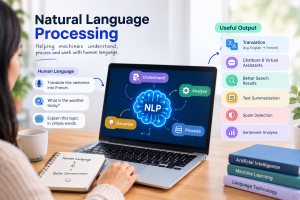
Have you ever used voice search, translated a sentence online, or asked a digital assistant a question? What is Natural Language Processing? It is a branch of artificial intelligence that helps computers understand, process, and work with human language. This technology allows machines to handle written text and spoken words in ways that are useful for everyday applications.
What Is Natural Language Processing?
Natural Language Processing, often called NLP, combines artificial intelligence and language technology to analyze human communication.
For example, when you type a question into a search engine, the system needs to understand the meaning of your words before showing useful results.
How Does It Work?
A language-based AI system first processes the words it receives. It looks at patterns, context, and relationships between different parts of a sentence. Machine learning models can be trained with large collections of text and speech. Through this training, they learn how language is commonly used and can produce more useful results. The process can involve tasks such as recognizing words, understanding meaning, translating text, and analyzing sentences.
What Are the Applications of NLP?
It could be that you’re already using NLP technology in your everyday life! Common examples are Voice assistants who are able to understand your voice commands and questions.
Translation tools that translate text between languages. Search engines that can help you understand what people are searching for. Chatbots that allow you to talk to AI systems. Email apps that can help detect spam emails.
Why Is Text Analysis Important?
We use language every day to communicate, but computers work differently. NLP helps to close the gap. By helping answer common questions, it can help save time. Plus, it can process large amounts of text.
Final Thoughts
Sub natural language processing is an important part of hypermodern AI, recognition computers to understand text and speech.
This has become a key part of many digital services from voice search to translation and conversation tools. As AI gets more powerful, this technology will continue to evolve.